The MOGenWeb Project - USGenWeb
Hickory County MOGenWeb
Tracing generations through Ozark echoes - free genealogy and local history for Hickory County, Missouri.
Welcome to the Hickory County Genealogy Project. Explore records, stories, maps, biographies, and the county museum from the links below.
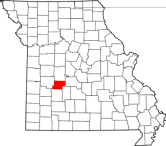

Records
Birth, death, marriage, obituary, census, cemetery, and vital-record resources preserved locally.
Photos & stories
Family, place, and topic narratives—browse by family, era, or place.
Biographies & families
Published biographies and submitted Family Group Sheets for Hickory County surnames, including History and Tragedies of Hickory County (1957).
Museum & Historical Society
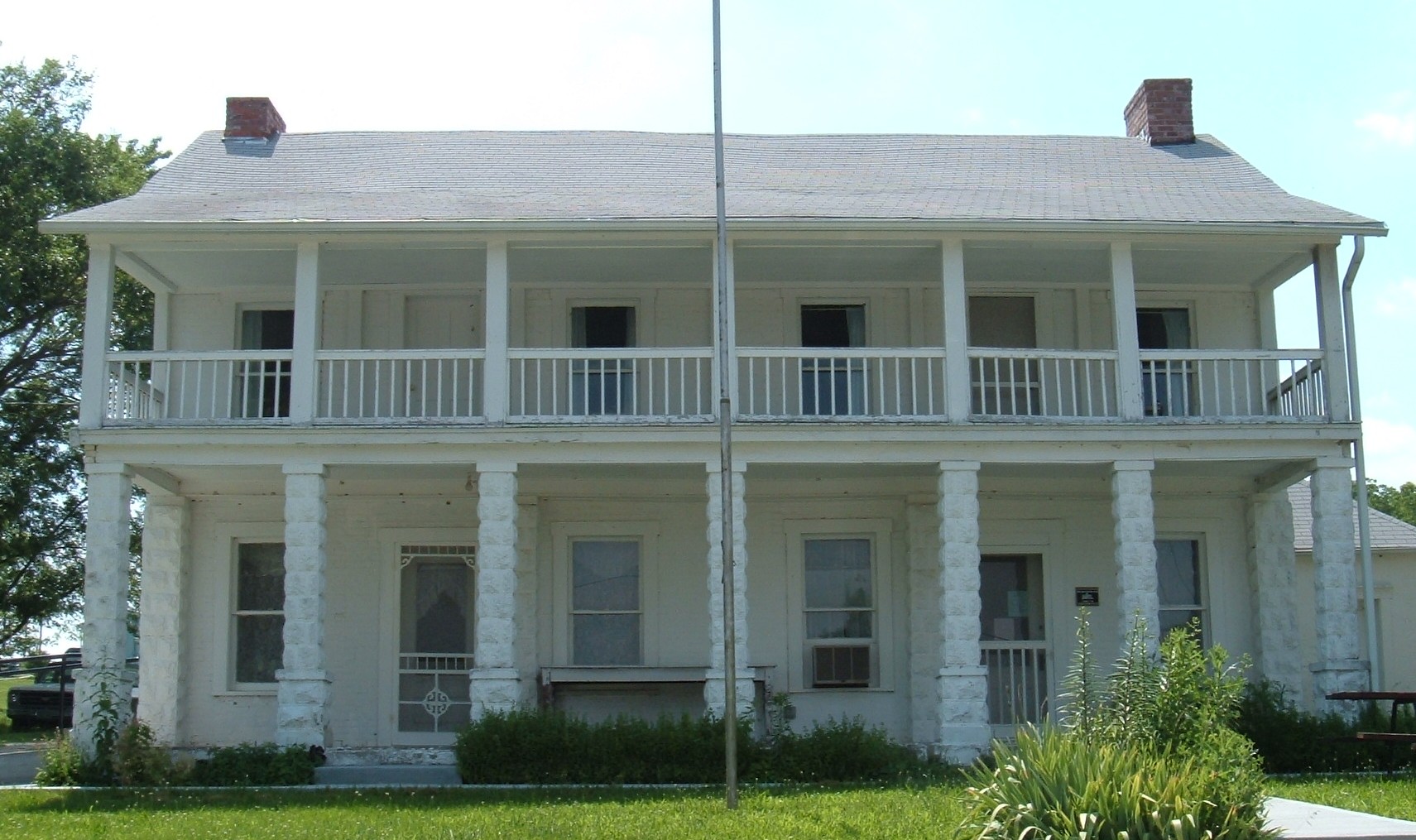
The Hickory County Historical Society museum, research room, products, and community programs in Hermitage.
Queries
Post or send a surname / research query for Hickory County.
Records & maps
Browse local records, maps, and biographies.
Neighboring counties: St. Clair - Benton - Camden - Dallas - Cedar - Polk
County Coordinator: .
Brief history
Hickory County was formed 14 February 1845 from Benton and Polk counties and named for President Andrew Jackson ("Old Hickory"). The county seat is Hermitage. Early settlement followed the creeks and river bends; churches and small towns anchored community life. The Civil War divided neighbors here as elsewhere in Missouri. This site gathers records and stories so researchers can follow those trails.
History and Tragedies of Hickory County (1957) collects local stories by Albert Thomas Donovan, Faye Smith Allen, and Nannie Bandel Jinkens. It is listed with the other county histories on the biographies page.